
Prioritizing Environmental Adaptability
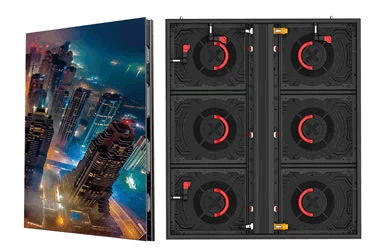
Designed to withstand harsh outdoor conditions-such as intense sunlight, rain, snow, and high temperatures-the system prioritizes IP65/IP66-rated waterproofing and dustproofing, along with wind- and seismic-resistant structural integrity. An active thermal management system ensures stable operation across a wide temperature range of -30°C to 60°C.
To ensure longevity in challenging environments like coastal areas (characterized by high salinity and alkalinity), the cabinet structure is designed to pass salt spray testing.
Precision Optimization of Display Performance
Adaptive Brightness: Brightness levels are tailored to specific needs-standard scenarios feature ≥8,000 nits, while areas with direct sunlight can exceed 10,000 nits. An automatic brightness adjustment system prevents light pollution while maintaining clear visibility.
Color and Visual Experience: Pixel-level calibration ensures uniform chromaticity across the entire screen. A combination of 16-bit grayscale and high-contrast black masks delivers natural color transitions. Wide viewing angles (≥164° horizontal and ≥156° vertical) ensure an optimal viewing experience for audiences positioned at various locations.
Core Focus on Safety and Reliability
The entire unit utilizes flame-retardant materials, and the power distribution system integrates multiple safeguards against overcurrent, short circuits, and overheating. A modular design supports hot-swappable maintenance, thereby reducing the risk of system failure.
Structural design strictly adheres to standards for wind resistance, seismic stability, and load-bearing capacity, ensuring the display's appearance harmonizes with the host building and the surrounding urban landscape.