
Core Foundational Technologies
Pixel and Display Technology
Utilizes a high-density LED dot-matrix layout, combining red, green, and blue LED chips to achieve full-color display. Some products incorporate virtual pixel technology, theoretically quadrupling image resolution to meet clarity requirements across various scenarios.
Brightness and Adaptation Technology
Mainstream products offer brightness levels ranging from 4,500 to 10,000 cd/m², with some exceeding 10,000 cd/m² for direct sunlight environments. Intelligent brightness adjustment automatically modulates output based on ambient light, balancing visibility with low power consumption.
Key Environmental Adaptation Technologies
Protection Technology
Mainstream industry products achieve an IP65 protection rating, ensuring complete dust-tightness and resistance to low-pressure water jets from any direction. Some high-end models feature upgraded rear protection (IPX5) to withstand harsh outdoor conditions such as heavy rain and blowing dust.
Thermal Control and Structural Technology
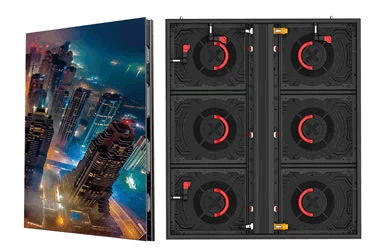
Equipped with active cooling systems using axial fans, these displays operate within a temperature range of -20°C to 60°C, while specialized wide-temperature models function stably between -40°C and 60°C. Die-cast metal cabinet structures provide resistance to strong winds, making them suitable for extreme climates across different regions.